
Zirconia, lithium disilicate or PFM: choosing the right crown material
There is no best crown — only the right material for this tooth, this bite and this patient. Having made all of them at volume, here's how we actually think about the choice.
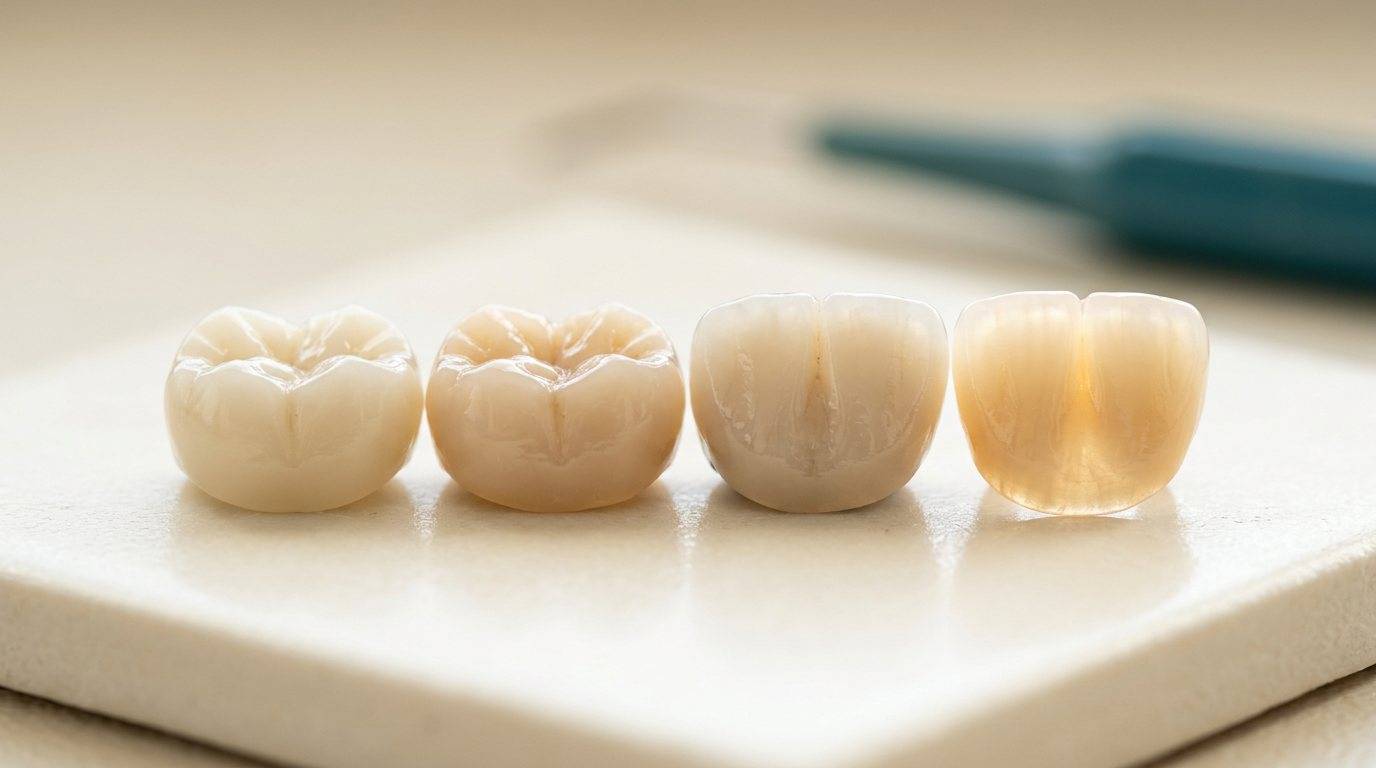
The trade-off we weigh on every case
Crown materials live on a line between strength and lifelike translucency. As a rule, the stronger a material, the more opaque it tends to be; the more natural it looks, the more delicate it is. Almost every decision below is just about placing your case correctly on that line. To set rough expectations (these are broad, real-world bands, not lab-bench absolutes):
| Material | Relative strength | Character |
|---|---|---|
| Monolithic 3Y zirconia | Very high (~1,200 MPa band) | Toughest, most opaque |
| Multilayer 5Y zirconia | High (~600–800 MPa band) | Balanced strength and translucency |
| Lithium disilicate | Moderate (~450 MPa band) | Most lifelike, more fragile |
| PFM | Metal core + porcelain | Reliable core, porcelain can chip |
Monolithic zirconia — our default when load rules the case
When function has to come first, this is where we go. It's the toughest option, kind to the opposing tooth when we polish it properly, and dependable for posterior single crowns, bridges and bruxers. The cost is opacity — in the smile zone, monolithic zirconia needs real skill to avoid looking flat, and we're honest with dentists about that. We reach for it when: high load, posterior, grinders, multi-unit bridges, tight space — function ahead of ultimate beauty.
Multilayer zirconia — the balance we lean on most
Modern high-translucency zirconias give up a little strength for a far more natural gradient, and for us they've become the everyday sweet spot on premolars and posteriors that show in the smile. You keep most of the durability and gain aesthetics that satisfy the patient. We reach for it when: visible premolars and posteriors, normal-to-moderate forces, aesthetics matter but so does longevity.
Lithium disilicate — still our benchmark for the front
It's weaker than zirconia, and we don't pretend otherwise. But its translucency reads like natural enamel, which is exactly why it remains our reference for the anterior zone, veneers and inlays/onlays. One firm opinion: bond it, don't just cement it. Adhesive bonding (etch and silane) is where this material gets both its beauty and its practical strength; treat it like a cemented zirconia and you waste it.
PFM — not our first choice, but not dead either
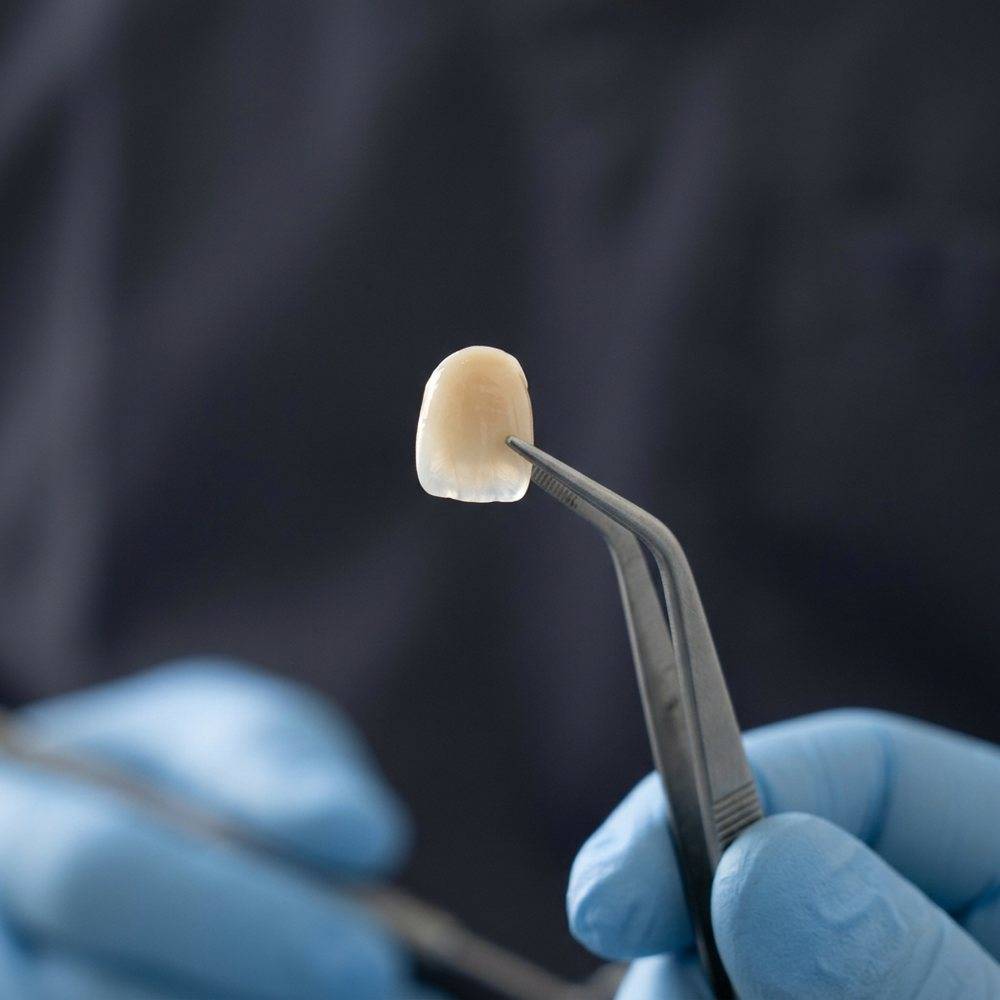
We'll say plainly that all-ceramics have taken most of PFM's ground, and for good reason — the potential grey gingival margin, porcelain chipping off metal, and lower translucency are real. But we won't dismiss it. For certain long-span bridges or cost-sensitive situations, a metal substructure is still a sensible, proven answer, and we're glad to make it well when the case calls for it.
How we'd choose, in one glance
- Molar, heavy bite / bruxer → monolithic zirconia.
- Premolar in the smile → multilayer zirconia.
- Single anterior or veneer → lithium disilicate, bonded.
- Multi-unit posterior bridge → monolithic zirconia (PFM in select cases).
- Maximum aesthetics, low load → lithium disilicate.
- Long-span or cost-driven → PFM.
Two things we care about as much as the material
- The preparation. Every material has a minimum thickness and margin it needs to perform. Under-prep a zirconia and you rob it of strength; under-prep a glass-ceramic and you invite a fracture. We'd rather flag a thin prep than quietly deliver a compromised crown.
- Cement vs bond. Zirconia is generally cemented (with the right primers after air-abrasion); glass-ceramics should be adhesively bonded. Matching the luting protocol to the material is part of whether the restoration lasts.
Most "which material?" debates disappear the moment you name the tooth and the bite. Posterior and heavy → zirconia. Front and delicate → lithium disilicate, bonded. Everything else is nuance. When you're genuinely unsure, tell us the load and the aesthetic demand and let us weigh in — that's a call we'd rather make with you than have you make alone.
How Jaw Experts fits in
Send the case, and if you're on the fence, a line about the bite and the aesthetic goal. Our doctor-led QC checks the material against the indication, and we'll flag when the material you asked for is fighting the case — before we make it, not after.
Send us a case →