
How to choose the right intraoral scanner for your practice
Our honest, no-brand-loyalty take on choosing an intraoral scanner — because we see the output of nearly every scanner on the market, every week, from the receiving end.
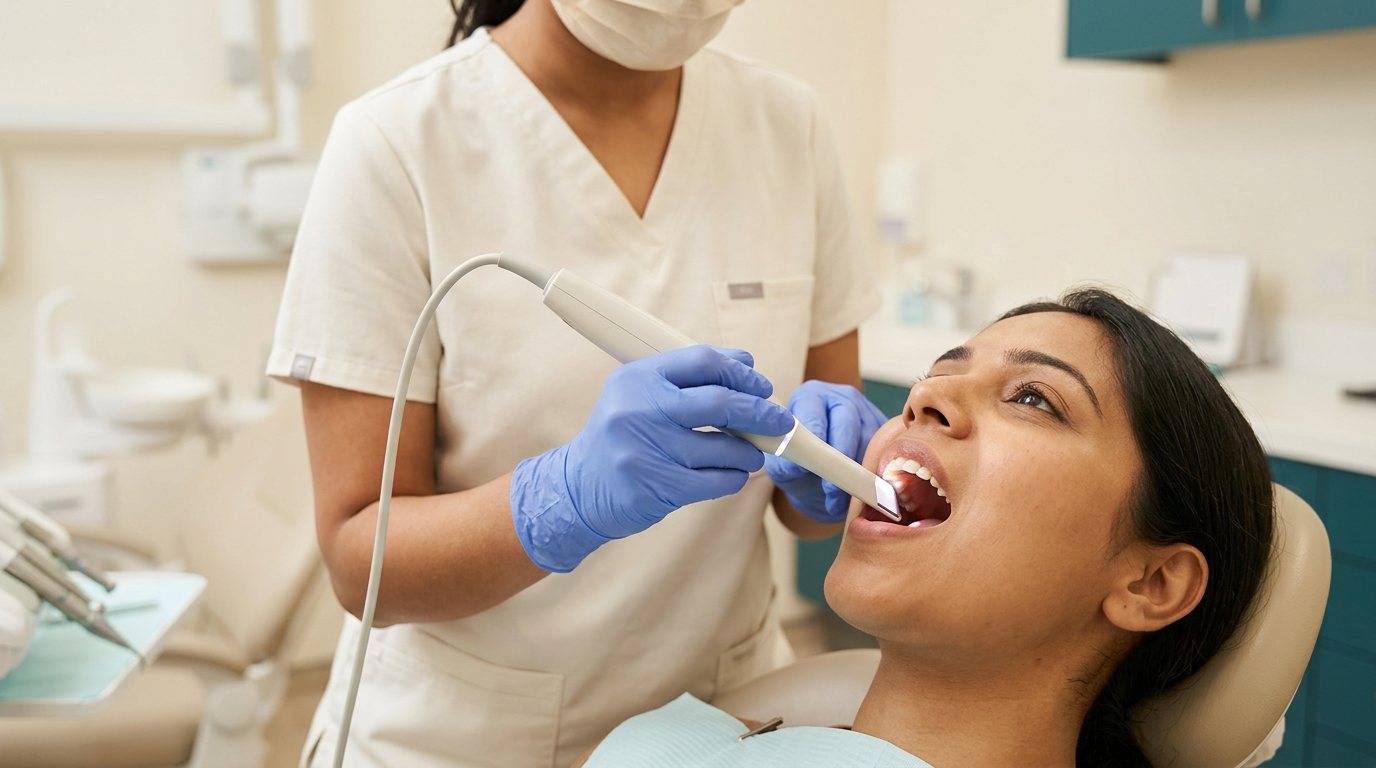
Our starting position: the scan sets the ceiling
Here's the thing we wish every dentist heard on day one — the scan is the ceiling for the whole case. A brilliant lab cannot rescue a distorted or incomplete scan; we can only be as good as what arrives. So we don't think of the intraoral scanner as a gadget. We think of it as the most important instrument in your digital kit, and we'd choose it with that seriousness.
Accuracy matters — but not the way the brochures want you to think
There are two ideas hiding inside the word "accuracy": how close the scan is to the real geometry, and how repeatably you can reproduce it. Our candid view: for single crowns and short bridges — which is most of what most practices do — essentially every current scanner is accurate enough, and chasing the last few microns is a distraction. Where accuracy genuinely earns its weight is full-arch and cross-arch implant work, because small errors stack up across the arch. So our advice is simple: weight accuracy heavily only if your case mix is heavy on full-arch and implants. Otherwise, look elsewhere.
The decision we care most about: open files
If we could influence only one line on your purchase order, it would be this — buy a scanner that exports a standard, open file you can send to any lab. A closed ecosystem quietly decides who is allowed to make your work and can tie you to subscriptions and partner labs. An open file keeps you in charge. Ask the rep one plain question and watch their face: "Can I export a standard file and send it to whichever lab I want?" If the answer isn't an easy yes, know exactly what you're giving up.
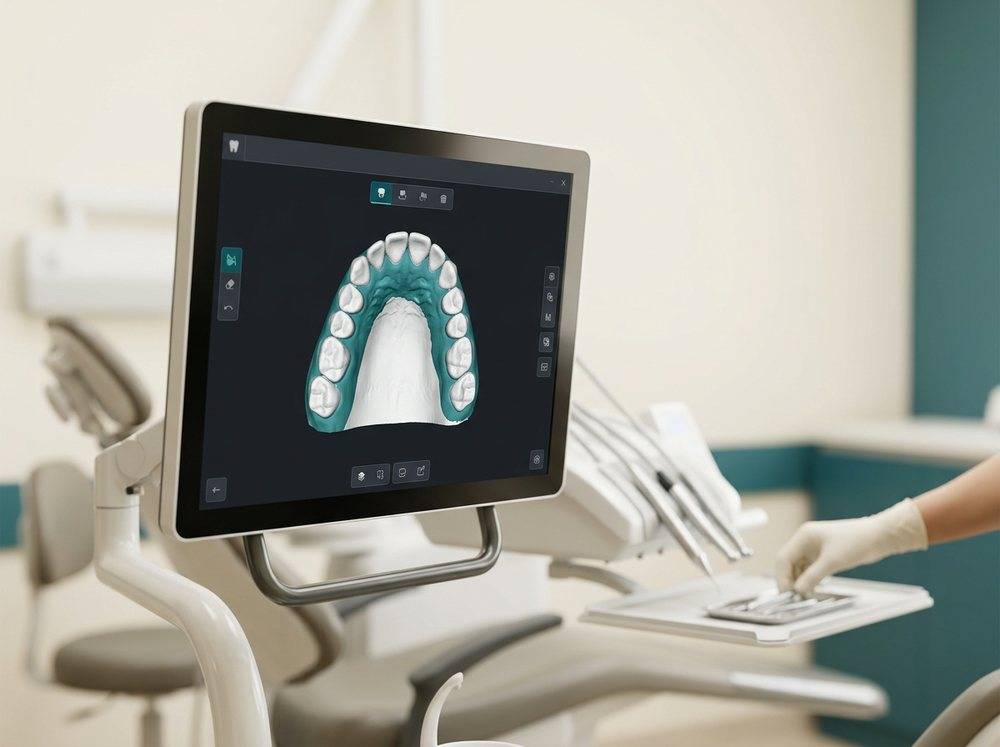
The scanner your team actually uses beats the one that scores well
We can always tell when a practice quietly dreads scanning — the cases arrive rushed and incomplete. So our second-strongest opinion is about ergonomics, not specs. Put the wand in the hand of whoever will scan most, and have them reach a second molar during the demo. Judge weight, tip size, how gracefully the scan recovers when you stop and restart, and whether the cart or cable suits your surgery. Comfort in the hand wins more real-world cases than any headline number.
Software and workflow — the invisible half
The wand is only half of what you're buying. What decides your daily experience is how fast you can capture, trim and send a case, whether it talks to your practice software, and how simply you can share a case with your lab. Clinical extras — margin marking, clearance maps, shade help — are nice, and we'll happily use them, but we'd never let them decide the purchase.
Cost: the number on the box is the smallest one
Our blunt view on the price of an intraoral scanner: the sticker is the least important figure. Build the real five-year cost — mandatory subscriptions, any per-scan or per-export charges, warranty and loaner terms, and training. We've watched "cheap" closed scanners with per-case fees end up costing more than a pricier open one. Do that maths before you sign, not after.
Trial it on your own patients before buying
A showroom is a sales environment; your surgery is the truth. Insist on scanning your own patients for a week before you commit, and lean on the manufacturer for proper onboarding — the first month is what decides whether the scanner becomes a habit or a paperweight.
Our quick pre-purchase checklist
- Does it export a standard, lab-agnostic (open) file? For us, close to non-negotiable.
- Have you costed subscriptions and per-scan fees over five years?
- Did the person who'll actually scan test the wand on a real mouth?
- What are the warranty, loaner and local-service terms?
- How much of your work is full-arch/implant — and does accuracy hold up there?
If most of your work is crowns and bridges, stop agonising over micron charts. Buy the open, comfortable, well-supported scanner your team will happily pick up a dozen times a day, and put the saved energy into scanning technique. That combination produces better cases than a premium scanner nobody enjoys using.
How Jaw Experts fits in
We accept standard scan files from any open scanner, so your hardware never decides who makes your work. Not digital yet? We'll collect conventional impressions and help you move across at your pace. Once you're scanning, submitting and tracking a case is a few taps — and a qualified dentist oversees the QC on what comes back, whatever wand it started on.
Send us a case →