
Screw- vs cement-retained implant crowns: when to use each
Retention looks like a small tick-box on the prescription, but it decides how a restoration behaves for its whole life. Both approaches work well — the skill is matching the method to the case.
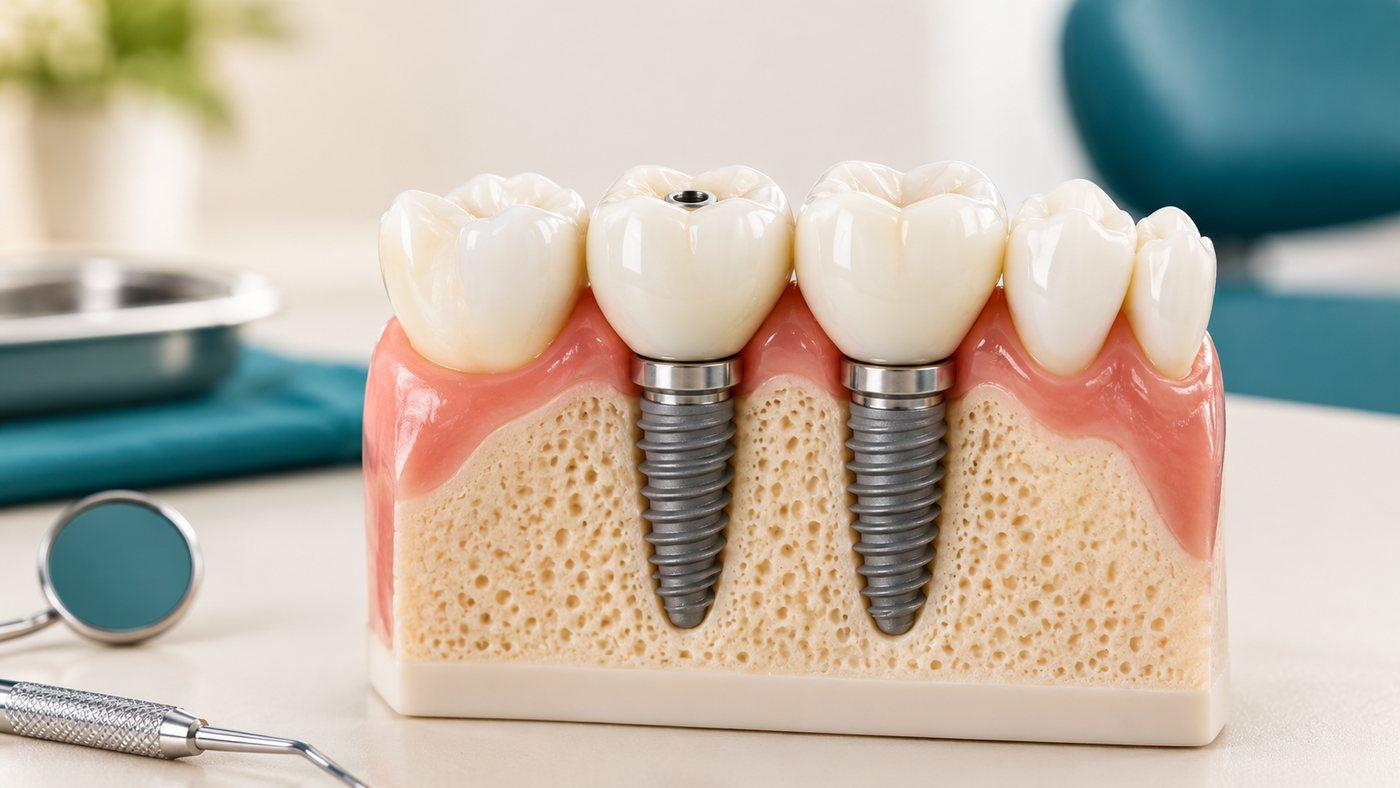
Why we take this decision seriously
Every implant crown will eventually need attention — a loose screw, a chipped edge, a hygiene review. How painlessly you handle that day is decided now, by retention. That single truth shapes most of our thinking, and it's why our instincts have shifted over the years.
Screw-retained — our default when access allows
A screw-retained crown threads to the implant or abutment through an access channel you can reopen. We like it, and we'll say why plainly:
- It's retrievable. Reopen the channel, lift the crown, fix the problem, re-torque — no destruction. That alone prevents a lot of expensive remakes.
- There's no cement to leave behind — which, as we explain below, is the risk we most want to design out.
- Angled screw channels changed our habits. Being able to steer the access hole away from a facial surface (commonly up to around 25°) removed the old reason to avoid screw-retention in the smile zone. Many cases we'd once have cemented, we now happily screw-retain.
The honest trade-offs: you need enough interocclusal space for the channel, the sealed access point is a small aesthetic and occlusal consideration (well managed with modern materials), and it's a touch more exacting to fabricate. We think it's worth it.
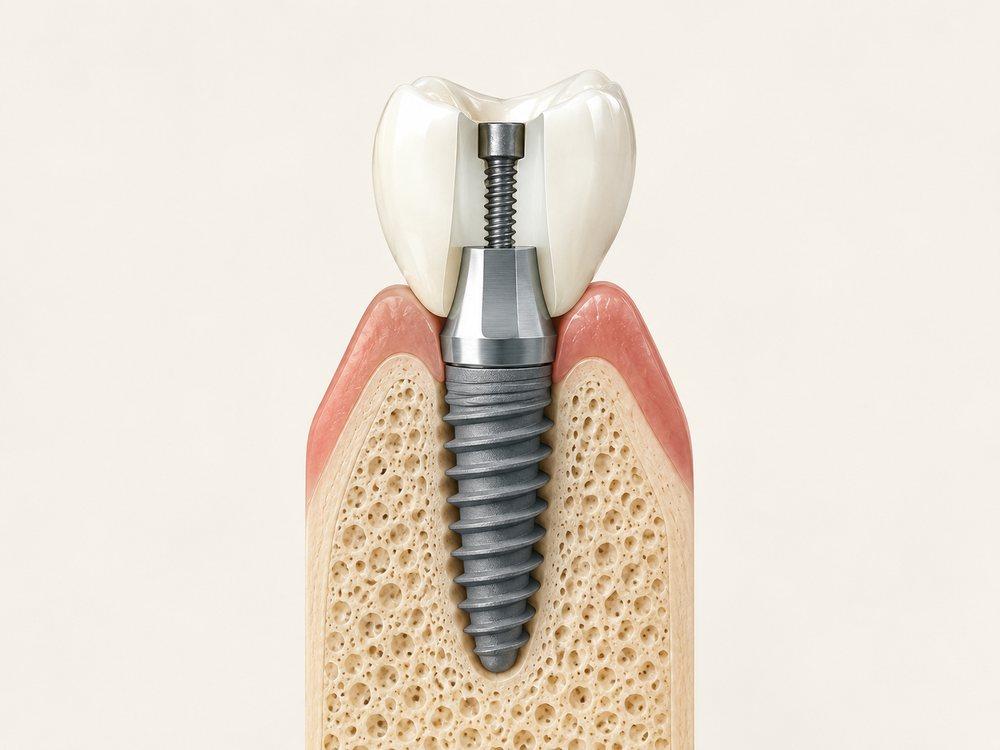
Cement-retained — right when the channel would betray the smile
Cementing onto an abutment, exactly like a crown on a natural tooth, still has a real place. It gives a clean, passive, channel-free surface, and when the screw would otherwise emerge through a facial face — and angulation can't fully rescue it — cement is the better answer.
But we're firm about the catch: residual cement is the single biggest avoidable hazard in implant dentistry. An implant doesn't have the natural seal a tooth has, so excess cement can slip below the tissue and smoulder as a low-grade irritant — a recognised road to peri-implantitis and late failure. And if the abutment screw loosens under a cemented crown, you often can't remove the crown without destroying it. So our position is: cement when the case genuinely calls for it, and then cement with real discipline.
The way we weigh it, side by side
| Factor | Screw-retained | Cement-retained |
|---|---|---|
| Might need to get back in later | ✓ | |
| Any residual-cement concern / deep margin | ✓ | |
| Screw would exit a facial surface, angulation can't fix | ✓ | |
| Limited interocclusal space | ✓ | |
| Maximum aesthetics, channel unavoidable facially | ✓ | |
| Multi-unit / full-arch (hygiene, serviceability) | ✓ |
Where we've landed: screw-retain whenever access reasonably allows, and treat cement as the considered exception. Angled screw channels have widened "reasonably allows" enough that a lot of anterior cases now qualify. It isn't dogma — cement remains the right call in specific situations — but the default should be the retrievable, cement-free option, because that's the one that protects the tissue and your future self.
If you're cementing, cement like it matters
- Use a radio-opaque cement so any excess shows on a radiograph.
- Pre-seat on a die and wipe the internal excess before it goes in the mouth.
- Keep the margin accessible — near or above the tissue where you can see it.
- Confirm complete removal before you finish, not at the next visit.
How Jaw Experts fits in
Tell us the implant system, the retention you want, and roughly where the screw channel is likely to emerge. Our doctor-led QC checks the plan, and we'll actively flag when an angled screw channel could turn a "this has to be cemented" case into a cleaner screw-retained one. We make both, across common systems.
Send us a case →