
Crown & bridge
Single crowns to multi-unit bridges, anterior to posterior — made digitally, backed by doctor-led QC, and built to seat with a clean margin and a shade that survives the try-in. Here's what we make, how to choose, and how to prescribe for a great result.
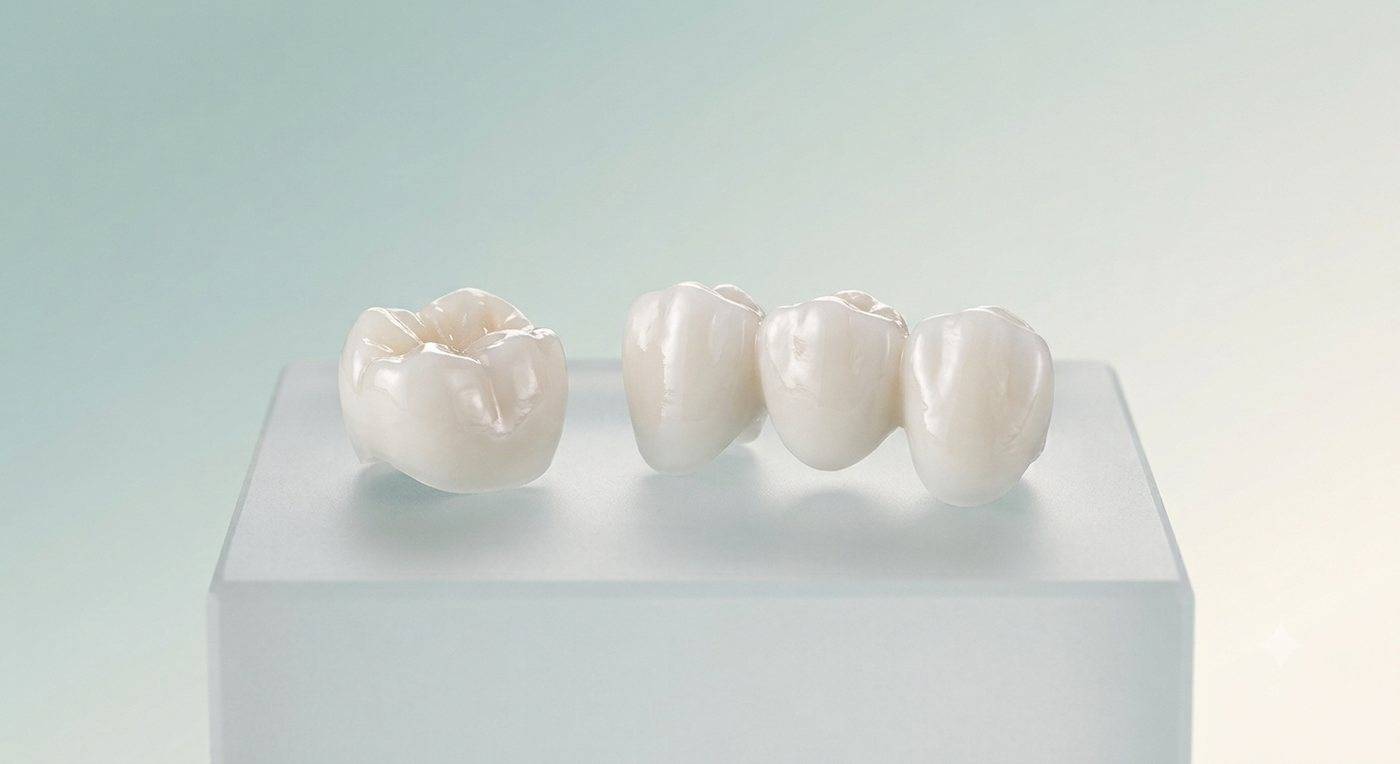
What we make
The full range of fixed work: single crowns across the mouth, multi-unit and long-span bridges, inlays and onlays, and veneers for the aesthetic zone. We accept standard scan files from any open scanner, and we'll pick up conventional impressions while you're going digital — your hardware never decides who makes your work.
Materials & options
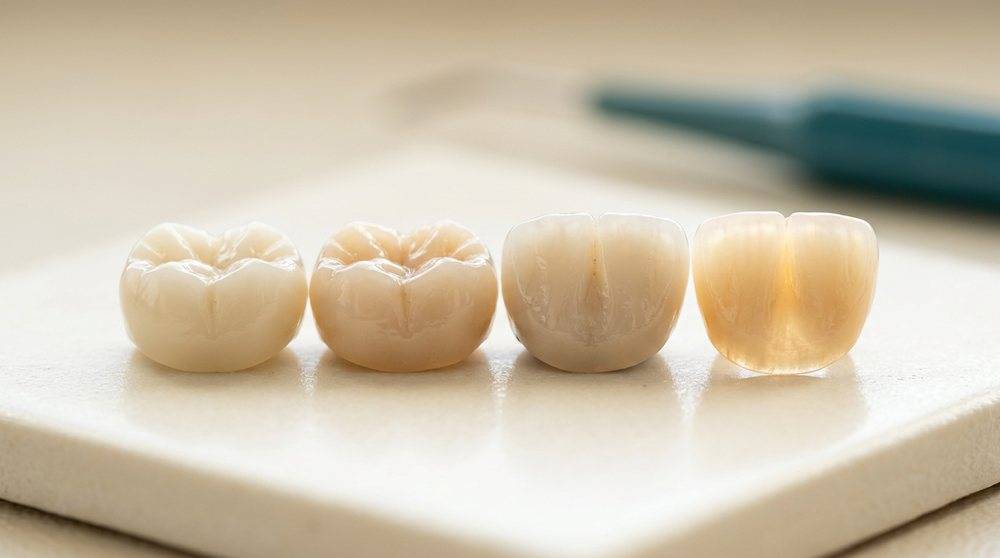
There's no single best crown, only the right material for this tooth and bite. We make all of them, and we'll flag when the one you asked for is fighting the case:
| Material | Character | Where it shines |
|---|---|---|
| Monolithic zirconia | Toughest, more opaque | Molars, bruxers, multi-unit bridges |
| Multilayer zirconia | Balanced strength & translucency | Visible premolars and posteriors |
| Lithium disilicate | Most lifelike (bond it) | Anteriors, veneers, low-load single units |
| PFM | Proven metal core | Select long-span or cost-driven cases |
Not sure which to choose? Our full write-up on zirconia vs lithium disilicate vs PFM walks through it tooth by tooth.
Getting a great result: what helps us most
The lab can only be as good as what arrives. Four things do more for the final crown than anything we do at our end:
Prescribing for a clean fit and shade
- Give the material room. Roughly 1.0–1.5 mm occlusal and axial reduction for most all-ceramics. Under-prep is the commonest cause of a thin, weak or over-contoured crown — we'd rather flag it than quietly compromise.
- A margin we can read. A clear, continuous chamfer (or light shoulder), kept at or above the tissue where you can capture it cleanly. Blurred, bloody or deep sub-gingival margins are where fit is lost.
- Shade, done early. Take it first, on a wet tooth, in daylight, and send a photo with a reference tab — plus the stump shade for translucent materials. Our shade guide has the full routine.
- A true bite and the opposing arch. Most "high crown" adjustments trace straight back to the bite record, not the crown.
A crown that fits and matches is a communication win as much as a fabrication one. Tell us the tooth, the bite and the aesthetic goal, and if you're on the fence about material, ask — that's a call we'd rather make with you than have you make alone.
How we handle quality
Every case is designed digitally, with quality control overseen by qualified dentists. If something in the prescription contradicts itself (a light shade over a dark stump, a material fighting the load, a margin we can't read), we query it before we fabricate, not after your patient is back in the chair. And you can watch the case's status the whole way through.
Send a crown or bridge case
Submit a scan or book a pickup, get a case number and a status you can follow, and message us on the case itself. New to digital? We'll take conventional impressions and help you cross over case by case.
Submit a case →